By Maj. Mike “Pako” Benitez
If they [US military] want to guarantee their position in the field of military reforms that has already begun and will be completed right away, then the first thing that must be resolved is to eliminate the lag that exists between US military thinking and military technology.
— Qiao Liang and Wang Xiangsui, China PLA, Unrestricted Warfare, 1999
In 1991, Operation Desert Storm showcased the modern US military for all to see—and the world was watching. Nations with growing military power have adapted accordingly, leveraging technology to grow increasingly capable threats to counter US force projection. The predominant phrase used to describe this growing threat environment—anti-access/area-denial (A2/AD)—is indiscriminate and problematic. Founded in concepts and strategy, conflict in an A2/AD environment has yet to bridge the gap to manifest itself in operational art, preventing the Joint Force from converting the idea into tactical tasks and stifling operational agility and coherence in future conflict.
The Origins and Environment of A2/AD
Though the principle of A2/AD has been around for centuries, the phrase actually dates back to 2003 when the Center for Strategic and Budgetary Assessment report stated, “anti-access (A2) strategies aim to prevent US forces entry into a theater of operations, then area-denial (AD) operations aim to prevent their freedom of action in the narrow confines of the area under an enemy’s direct control.”
That soon became truncated and proliferated, and the term is now ubiquitously used in defense industry to describe an opposition’s doctrine, strategy, operations, and even an individual weapon’s capabilities. Despite A2/AD having lived in the defense lexicon for 13 years, it is still largely absent from the doctrinal publications of all the armed services. Counter-A2/AD dialogue still largely remains in the conceptual domain, from the Joint Operational Access Concept to the Joint Concept for Access and Maneuver in the Global Commons (JAM-GC, formerly Air-Sea Battle).
Even worse, over time “A2/AD” has become synonymous with modernization dialogue and therefore a relative term. One could argue that the Russian SA-2 surface-to-air missile system provided an A2/AD capability throughout the 1960s. It famously shot down Gary Power’s U-2 over Russia in 1960 and was attributed to 190 aircraft losses in the Vietnam War. Though the SA-2 is widely proliferated and still in service around the world today, it could not be further from modern A2/AD. Hypothetically, suppose the Joint Force was instantly transformed to counter all of the threats today, would the term “A2/AD” cease? Unlikely; instead the term would simply seek new systems to define its existence.
This conflation came to a head in October 2016, when Chief of Naval Operations Adm. John Richardson declared, “To ensure clarity in our thinking and precision… We’ll no longer use the term A2/AD as a stand-alone acronym that can mean all things to all people or anything to anyone – we have to be better than that.” To resolve this, we must increase the granularity of “A2/AD” to evoke operationally-grounded thought, to serve as the bedrock from which representative strategy can be built. This leads to viable planning to achieve the interoperability, interdependency, and integration that is required for domain synergy to achieve victory in future conflict. Anything else is simply defense rhetoric.
Concern Born From Stovepipes
Within the past 20 years, the services individually became concerned about A2/AD. The Army has generally been concerned with anti-access, having been well-aware since the Cold War that theater ballistic missiles threaten vital logistics and transportation ports of debarkation required to bring a meaningful number of forces into theater.
The Air Force has historically been more concerned with area denial. This mentality was originally grounded in the inherent distance aircraft can force-project, seemingly negating anti-access concerns. Consequently, the Air Force has historically placed emphasis on putting weapons on target. However, any target worth attacking is likewise worth defending. This is reflected in aircraft losses from surface fire in virtually all major (and some minor) conflicts throughout their history.
Unlike the Army or Air Force, the Navy takes a more holistic approach due to operational necessity. Threats by elusive enemy submarines or attack from the air have generally inhibited access, thus determining operating locations. This affects each ship’s purpose; the range a carrier must stand-off directly affects the power projection of its air wing. Additionally, the ship must also account for surface threats. Not to be overlooked, the Navy’s submarines must also contend with anti-access via mines and area denial from torpedoes—from the air, surface, and sub-surface.
Domain Mindedness
Though area denial was founded in counter-air evolution, technology is continuing to fuse the once stove-piped domains of all services. For example, the Chinese YJ-12 air-launched anti-ship cruise missile and the Iran land-based Zafar anti-ship cruise missile both affect surface area denial. The trend of proliferation coupled with rapid advancement makes this multi-domain equation difficult to negate. Unfortunately, doctrinal approaches and methodologies do not exist to solve this problem, and the problem will only continue to grow in complexity.
Area-denial operations describe an environment without any useful level of granularity. Intelligence preparation of this environment reveals the confines of the geographic area in question, which join range and territory to domain. For example, an SA-20 SAM system has an advertised range of over 200 miles, but is not a direct threat to the land or maritime domains. Even an enemy fighter carrying air-to-air missiles, bombs, and anti-ship cruise missiles together does not have the same threat range.
Forward Edge of Area Denial (FEAD): A Warfighter-Based Solution
Historically, air and naval forces have gone around or over problems, not through them. Accordingly, maneuver in these domains have not been bounded or defined by lines on a map as in land warfare. On the battlefield, there are geographic coordination lines that are well-understood by all. The forward edge of the battle area (FEBA) defines the point where friendly and enemy troops clash; the forward line of troops (FLOT) describes most forward positions of friendly forces in any kind of military operation at a specific time. These acronyms are defined in joint publications and are germane in the lexicon of military planning.
Leveraging both the connotation and context of these terms makes logical sense in progressing joint thought in near-peer conflict. In this sense, a new joint doctrinal term is proposed: Forward Edge of Area Denial (FEAD). Though it might sound similar to A2/AD, it carries some distinctions that synergizes multi-domain efforts.
Like FLOT and FEBA, FEAD is an acronym that is self-defined. FEAD also shares similarities with suppression of enemy air defenses (SEAD). SEAD facilitates jointness through a common understanding across the services. SEAD is thought of as domain support (EMS) to another domain (air) that ultimately enables still other domains (maritime and land) to operate. FEAD would invoke the same multi-domain mindedness.
Using short-hand letters for the physical domains affected by area denial—A for air, SW for maritime surface warfare, SS for maritime subsurface warfare, SP for space (GPS Jamming), L for land, et cetera —and using them as prefixes provides applicable domain context that is easily translatable in text and charts. Most importantly, this provides the information on a single graphic—something that remarkably does not exist in any standard form. Having this in the planning process instantly invokes jointness and the elusive synergy of multiple domains.

FEAD provides a simple framework to create strategic clarity for some of the most difficult and complex operating environments imaginable. Applying FEAD in the planning process helps shape force application by providing an operational delineation to the environment. It instantly bounds the analysis of assessing the need to penetrate denied areas by clearly exposing complementing domain capabilities to provide an asymmetric advantage to offset risk.
Summary
In 1944, British strategist Sir B.H. Liddell Hart noted: “It is firepower, and firepower that arrives at the right time and place, that counts in modern war.” While talk of innovation is extensive today, the track record of action is one that reflects a reactive culture with an infatuation for lessons learned; fighting the last war. Unlike decades of low-intensity conflict where trial by fire and adaptation over time is permissible, in a near-peer military conflict there will be no second chances to garner and build on the mistakes of the past. A2/AD is a relative term and its definition is too fluid to be used in operational vernacular. If the US wishes to retain/regain its ability to penetrate a well-defended region with enough mass to achieve the effects it intends, operational art must be judiciously applied to convert the strategic problems into tactical solutions by seizing the initiative for the evolution of thought for future operations. The introduction of FEAD with associated domain designators begins this process by forming a baseline graphic from which to create strategic clarity for complex operating environments.
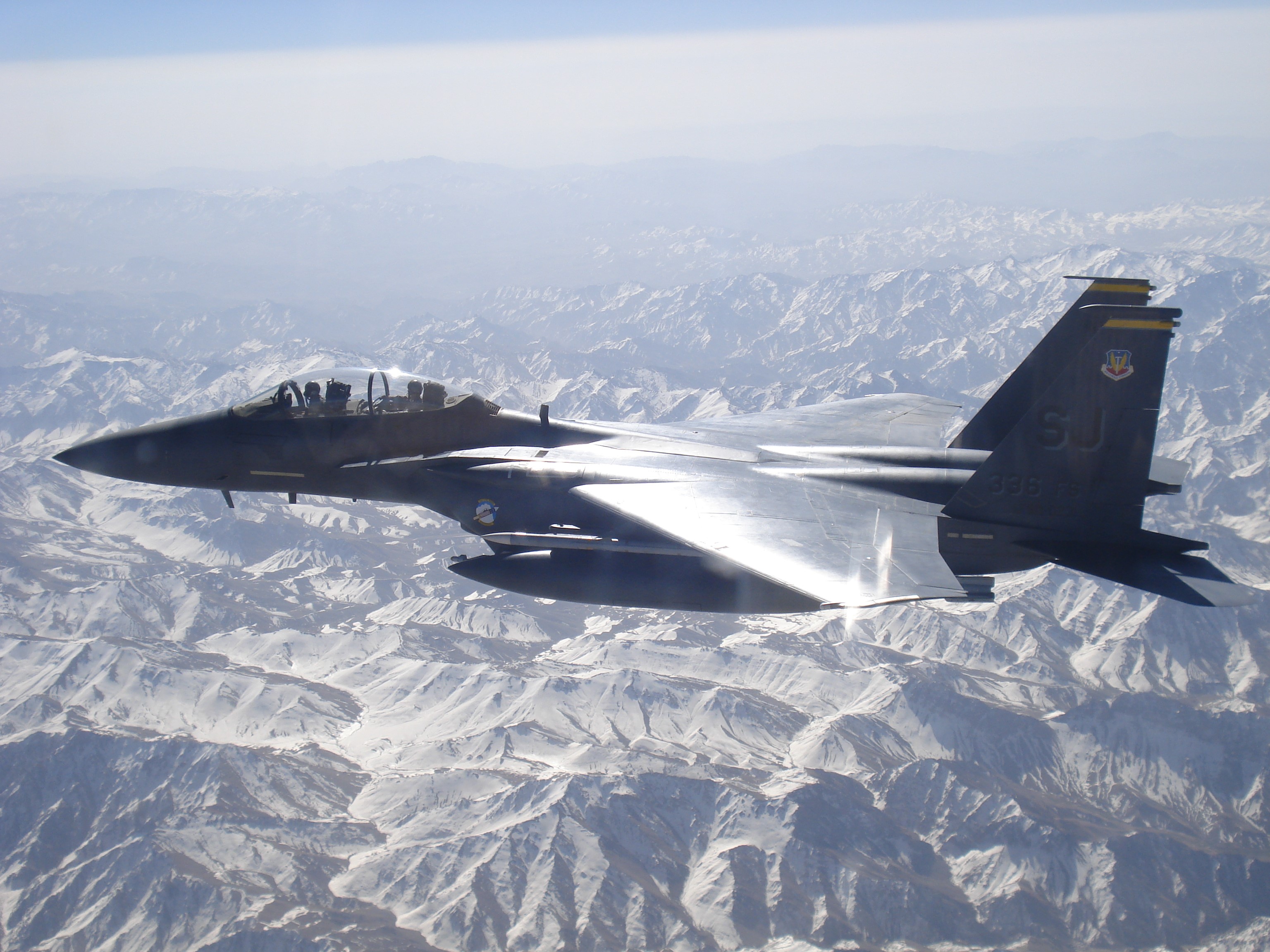
Maj. Mike “Pako” Benitez is an F-15E Strike Eagle Weapons Systems Officer with over 250 combat missions spanning multiple deployments in the Air Force and Marine Corps. He is a graduate of the US Air Force Weapons School and a former Defense Advanced Research Projects Agency (DARPA) fellow.
Disclaimer: The views expressed are those of the author and do not reflect the official policy or position of the Department of Defense or the U.S. Government.






Leave a Reply