Estimated Reading Time: 11 Minutes
By: Nick Tsougas
MDO Will Be Contested
The USAF requires a more candid approach to the harsh reality that it is not prepared to execute true MDO. There is currently too much territorial balkanization, red-tape, and cultural inertia to effectively address the myriad of changes required for effective implementation. This is of little consequence in the low intensity conflicts that have dominated the past 18 years, but the future holds an increased potential for a high-intensity conflict against a peer threat. Major combat operations will likely occur in China or Russia’s relative backyards, creating dire power projection issues, with a high probability that these localized battles will quickly escalate into an unrestricted global struggle across all six domains. Faced with this knowledge, the AF needs to quickly divest itself from the uncontested, unassailable expeditionary mindset that it has grown accustomed to and prepare for a new combat paradigm featuring full spectrum major combat operations orchestrated at the lowest levels of command.
To win in a future great power conflict, the USAF still expects to use an OPLAN model based on a 72-hour Air Tasking Order (ATO) cycle that is run by a Combined Air Operations Center (CAOC). This is completely unrealistic in an actual contested environment, relies on archaic Cold War era thinking, and does not take full advantage of the speed, flexibility, mass, and synergy that MDO offers. Not only is this concept too slow and cumbersome against a true peer threat, it relies on an overly vulnerable central node. The reality is that a future conflict will be won in the first few hours, let alone the first day. In addition, a theater CAOC, it’s backup, and other critical Command and Control (C2) nodes will be rendered useless by kinetic or non-kinetic attacks at the initiation of hostilities. Command, control, communications, computer, intelligence, surveillance, and reconnaissance (C4ISR) will be contested and possibly denied at every level across the entire electro-magnetic spectrum (EMS). It seems that the current MDC2 developmental concepts gloss over this reality. However, it is nearly inevitable that lower level commanders and operators will not enjoy the luxury of reach-back and unparalleled situational awareness that they have become accustomed to in the modern era.
The USAF has a few initiatives to address these concerns such as Agile Combat Employment (ACE) and the previously mentioned MDC2 construct, however these are very nascent in their development, are not adequately addressing the challenges of MDO in a contested environment in their current iterations, and are moving at a glacial pace of implementation that is stunning in its apparent lack of urgency. It’s true that anything as complicated as ACE needs to have a crawl-to-walk-to-run approach, however the idea of adaptive basing has been in development for years, and still has not gotten off the ground. It’s time to stop admiring the problem and validating the concept and actually practice and exercise it on a large-scale, routine basis. This is something that needs to be practiced at the lowest levels every day for it to be viable under duress in a high-intensity conflict. Senior Air Force leaders have noticed this, in fact, Air Combat Command (ACC) released a memo in 2017 detailing the need to exercise leadership at the tactical level. Unfortunately, this did not dramatically change the way that operational squadrons train on a daily basis. Training requirements, deployments, dwell time constraints, horrifyingly low operational readiness rates, and the fact that middle echelon AF leadership is simply too risk averse have created an insurmountable institutional inertia.
The USAF also cannot ignore the fact that ACE will most certainly occur under fire. With that in mind, it seems that no service, let alone the Air Force, is seriously looking at defending all of the warm bases and central hubs that will make adaptive basing successful. The USAF cannot rely on the other services to protect its assets from sustained missile attacks. It’s past time for the Air Force to seriously look at hardening these locations from attack with a concerted effort to acquire legitimate mobile, modern surface to air defense systems. Dispersion is not a valid option when an enemy like China can target every 8,000-foot runway in the Pacific that the service intends to use with a seemingly unlimited salvo of conventional missiles. The USAF understands that it will have to fight in this type of environment in the very near future, yet it currently has no operational squadrons, lower echelon leaders, or support organizations that are ready to successfully execute the concept on a reliable or sustained basis using actual war reserve materiel (WRM).

Figure 2: China’s Chengdu J-20 Black Eagle Supersonic Stealth Fighter.
Empower Lower Echelon Leadership
To account for this type of highly contested battlefield where individual units will be forced to act without an ATO, the Air Force needs to empower commanders and operators at the lowest levels. Regrettably, the Air Force does not practice or exercise the type of command at the squadron or wing level that will allow forces to succeed in a future fight. Although the USAF does a commendable job creating mission and package commanders, it relies on the AOC and the ATO to dictate the specifics. The service will be paralyzed if it is denied access to either or both of these during a future conflict. The AF needs to rewrite doctrine and publications to ameliorate its reliance on the centralized command and decentralized execution it used in past conflicts. This will also require significant changes to the current cultural paradigm. It should embrace the commander’s intent and mission type orders that other services use to enhance flexibility, speed, and lethality. AOC and ATO responsibilities should be dictated down to the wing and squadron level so that these forces can rapidly respond to emerging targets and threats. Allowing each wing to have AOC-like capabilities and authorities will remove the vulnerable central node that exists in the current structure and will allow lower level forces the ability to fight and survive on their own. This type of self-reliance will be necessary in a true multi-domain contested environment where fleeting pockets of access and superiority will exist. Tactical commanders will need the flexibility, authority, and real-time situational awareness required to seize limited windows of opportunity. There is simply no way that the current architecture can keep up.
This will obviously incur more risk and generate an increased possibility of fratricide. These types of issues can be reduced with redundant, distributed information networks that feed lower level commanders the knowledge and situational awareness necessary to make battlefield decisions. The idea is not to create an “unjammable” network, but to create so many repeating nodes that if one section is affected, it will have a small net effect. Exploitation of such a network will always be a concern, however if the US invests more heavily in quantum cryptography it will create a nigh “unhackable” system. This type of network will also be more resistant to kinetic attacks and will severely complicate enemy targeting. There will be too many nodes for the enemy to destroy in order for them to impede friendly actions. This network should utilize existing efforts such as Talon Thresher and other data amalgamation platforms in concert with machine learning and artificial intelligence (AI) to create targetable tracks that tactical operators can engage or use to build situational awareness. National technical means (NTM) should not be the sole or primary source of data because of their inherent vulnerability to kinetic and non-kinetic attacks in a highly contested environment. Instead, the goal should be to make everything with a sensor a potential contributor. The key will be to get relevant data incorporating “multiple votes” from disparate sensors directly to the lowest level warfighter to enable real-time decisions. This type of employment will require a significant amount of training at every level. Senior leaders will need to adjust to higher levels of risk acceptance while tactical operators acclimate to increased levels of uncertainty and guidance. Geographically separated squadrons and wings will need to train with other package assets utilizing these distributed information networks on a regular basis to build the muscle memory necessary to deconflict and force package effectively in a contested environment. This training will also support the ACE initiative and will build the lower level leadership and initiative that the Air Force needs to embrace to succeed in future conflicts.
Reimagining the Future
To support this new approach to C2, the AF should also rethink its research, development, and acquisition of emerging technologies. The service placed too much emphasis on low observable technology and the Joint Strike Fighter (JSF) as a whole at the expense of broader spectrum advancements, particularly in the EMS domain. This is antiquated thinking, and it is not embracing the nature of future conflict. Meanwhile, China and Russia are weaponizing information, pushing the boundaries of gray zone conflict to affect the human domain, and whole-heartedly embracing disruptive technologies like quantum computing on a scale that the Department of Defense (DoD) is not matching. The service and the DoD as a whole should be redirecting their time, effort, and money into technologies such as unmanned robotic swarm algorithms, hypersonics, capabilities in the EMS domain, AI, battery improvements, and directed energy weapons. The US is woefully behind peer adversaries in the field of hypersonics, surface-to-surface and surface-to-air missile capability, and a commitment to dominate in AI development. The US needs to use the opportunity created by the abrogation of the Intermediate-Range Nuclear Forces (INF) treaty to immediately level the playing field with China in the Pacific. In order to keep up with cutting edge advancements the USAF also needs to streamline and eliminate the plethora of roadblocks in the acquisitions process. Current practices are not dynamic or agile enough to keep pace with the rapidity of modern-day advancements. The DoD can no longer afford to create niche defense spending programs that are too large to fail, do not provide advantages or capabilities in every domain, and that take over 25 years to come to fruition. Ongoing initiatives like the Defense Advanced Research Projects Agency’s (DARPA) Assault Breaker II program offer a comprehensive solution to these issues. The Air Force requires an unwavering commitment to this type of overarching science and technology strategy in order to breakdown stovepipes, remove bureaucratic red-tape, streamline interoperability, and increase rapid acquisition of disruptive technologies that will help solve the many issues caused by trying to execute true MDO.

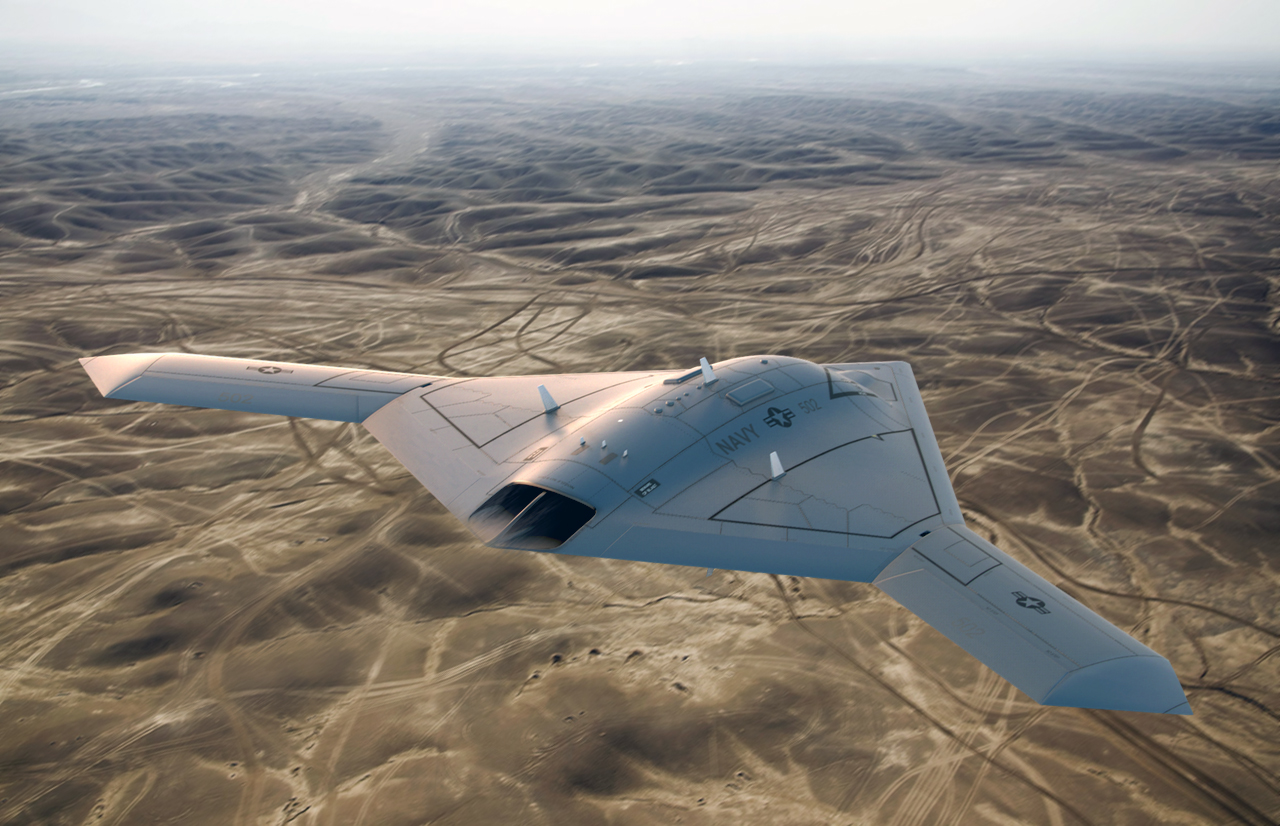
Figure 3: US Navy X-47B Stealth Unmanned Combat Aerial Vehicle.
In the spirit of this restructuring and reallocated acquisitions focus, another progressive idea is to eliminate the idea of separate services altogether. This could be a next generation Goldwater-Nichols Act or a paradigm shifting National Defense Authorization Act (NDAA) that charges the DoD with creating Marine Air-Ground Task Force (MAGTF)-esque units that encompass maritime, air, land, space and EMS assets that are able to fight MDO in contested environments with little to no centralized control. Imagine a highly mobile, potentially amphibious armored task force with C4ISR elements that has the organic capability to mount a significant air defense. This unit would have a legitimate compliment of long and medium range surface-to-surface missiles (SSMs) and anti-ship cruise missiles. Finally, the task force would also have the ability to launch Unmanned Combat Aerial Vehicles (UCAVs) that could execute penetrating airborne interdiction, close air support, electronic attack, and ISR missions. Having all of these capabilities within one task force will allow it to move with the speed, flexibility, and synchronization that units spread across services simply cannot match. If that idea proves too revolutionary for implementation, it may be time to rethink the idea of an independent Air Force. With the potential for a future Space Force and an increasingly independent Cyber Command, does the DoD need a penetrating counter air platform operated by the USAF if other services can hold any enemy target at risk utilizing hypersonics, SSMs, strategic cannons, and railguns? If a future multi-domain task force had the organic ability to conduct close air support, air superiority/air defense, and airborne interdiction using indigenous UCAVs and other land-based weapons, the Air Force may only need to exist to conduct airlift, air-to-air refueling, and other support missions. If the DoD truly wants to dominate the next conflict, it needs to accept some ostensibly radical ideas of restructuring to succeed in MDO.
No Time Like the Present
The USAF has spent too much time mired in counterinsurgency operations over the past 20 years and it cannot continue to take a lackadaisical approach to MDO. Potential adversaries did not remain idle and quickly eroded the Air Force’s perceived dominance in air, space, and the EMS. The service is not anticipating, adapting, and responding quickly enough to maintain its grassroots technological advantage and thus it needs to restructure its doctrine, thinking, training, and execution at every level in order to succeed in a future war. C2 and execution authority should be delegated to the lowest echelons of command, and the service needs to exercise this within the ACE concept as soon as possible. A dedicated, redundant, distributed network also needs to be created to support the ACE construct and to allow lower level commanders the situational awareness to execute operations in a truly contested environment. Finally, the service should reenergize and refocus its concept of what military research, development, and acquisition look like. The Air Force will be hard pressed to succeed in the next conflict against a great power if it does not take bold steps to engender the execution of true MDO.
Major Nick Tsougas is an Instructor Pilot with over 2000 hours in the F-15E. He is currently a student in the Multi-Domain Operational Strategist concentration at the Air Command and Staff College. Email: nicktsougas@gmail.com
The views expressed are those of the author and do not necessarily reflect the official policy or position of the Department of the Air Force or any organization of the US government.






Leave a Reply